Plastics Pipe Institute Celebrates 75 Years
The Plastics Pipe Institute, Inc. (PPI), the major North American trade association representing all segments of the plastic pipe industry, is celebrating its 75th anniversary in 2025 — marking a legacy of innovation, collaboration, and impact in advancing sustainable infrastructure solutions.
Founded in 1950 as the Thermoplastic Pipe Division of the Society of the Plastics Industry (SPI), the organization later became the independent non-profit Plastics Pipe Institute.
“PPI was a business unit of the Society of Plastics Industry until 1999,” explained Rich Gottwald, PPI president in the late 1990s. “It was then that we separated from SPI and formed as an independent trade association located in DC. SPI had been in DC since the early 80s – prior to that it was in New York City.”
Today, PPI represents the plastic pipe industry across North America and is recognized for its leadership in research, standards development, advocacy, and education. During the decades, PPI has played a pivotal role in advancing modern infrastructure by promoting the safe, efficient, and sustainable use of plastic piping systems. The PPI staff is supported by more than 200 member companies along with hundreds of dedicated volunteers who work on task groups, technical and marketing-support committees, sharing ideas and experiences.
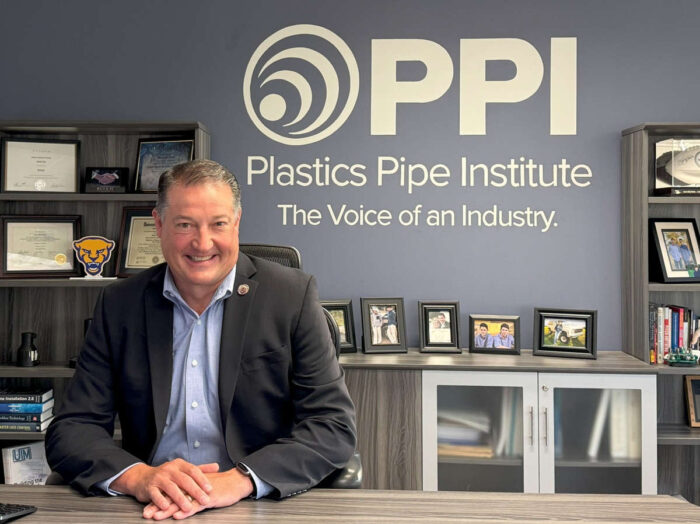
“For 75 years, PPI has brought together the brightest minds and leading companies in the plastic piping industry to solve challenges, improve performance, and build a better future for our world,” said David Fink, president of PPI. “It’s quite remarkable that many industry professionals have been participating PPI members for 20 years and longer. We’re pleased that our efforts now more than ever reach a global audience, and we’re incredibly proud of our history and very excited about where we and our industry are headed.”
Evidence of the long-time commitment to the organization by a many of its members can be found in those who have volunteered and served on various committees for 20 years and longer.
“We created the PPI Lifetime Achievement Award to honor and recognize that the success of the association was built on the shoulders of the members who have contributed so much for the advancement of the industry,” stated past PPI president Tony Radoszewski. “As an example, Stan Mruk was the first HSB chairman and played a crucial role in developing the testing parameters that got plastic pipe into the pressure industry in a major way.”
A History of Innovation
According to the group, a cornerstone of PPI’s technical leadership is the Hydrostatic Stress Board (HSB), that has played a vital role in advancing the science, testing, and performance of plastic piping materials. Made up of industry experts and material scientists, the HSB conducts rigorous evaluations to establish pressure ratings, develop testing methodologies, and ensure the long-term reliability and safety of plastic piping systems.
That technical foundation has supported PPI’s broader mission to promote the development and acceptance of plastic piping across a wide range of applications — including potable water, stormwater management, sanitary sewer systems, gas distribution, hot- and cold-water plumbing, heating and cooling, and conduit for power and communications cabling. From the earliest use of polyethylene pipes for water service lines to today’s cutting-edge multilayered composite systems used in energy infrastructure, PPI has worked closely with regulators, engineers, utilities, contractors, and manufacturers to ensure consistent performance and public confidence in plastic piping solutions.
The watershed period of growth started when the PPI board brought on Tony Radoszewski, an experienced marketing executive with an extensive background in both plastics and plastic pipe, as its new president.
“PPI had the foundation for efficiency and expansion when I joined in 2006,” he explained. “This model was that the CPPA division (now Drainage Division) had one engineer directing all its activities. The other sections, however, shared a staff member. This was the catalyst for a major operational change. We focused on having a single, qualified engineer who would lead a division, plus we added dedicated support staff. The move from Washington, D.C., to Dallas was also done to better serve PPI members as it was a central location, ideal for meetings with members who could usually fly non-stop from all over the North America. We also emphasized a motto of ‘Member Run, Member Led’ and applied it to all decision processes, which continues to pay off for PPI members and the industry overall.
“PPI got to be a major force by participation in the international community. PPI has held a leadership position in the Plastic Pipes Conference Association going back to the early 2000s when it was created by joining together three European pipe associations: TEPPFA, PE100+ and PVC 4 Pipes.”
During the decades, in addition to the Hydrostatic Stress Board, PPI has expanded to include five application-focused divisions — Building & Construction, Drainage, Energy Piping Systems, Municipal & Industrial, and Power & Communications — representing the extensiveness of the industry and its applications. Additionally, the group has heightened and expanded its public policy and legislative initiatives by establishing and staffing a Director of Sustainability & Advocacy this year.
PPI divisions are led by an experienced and expert professional engineer. “These directors bring deep technical knowledge, practical industry insight, and a commitment to advancing best practices,” Fink explained. “Their expertise ensures that PPI’s work is grounded in sound engineering principles and reflects the latest advancements in materials science, system design, and industry standards.”
Leading with Purpose
Today, PPI continues to lead by fostering collaboration across the industry to develop technical standards and codes, conduct critical research, and provide educational resources for engineers, policymakers, and the public.
Key initiatives currently underway include:
- Sustainable Infrastructure Advocacy: Promoting the use of plastic piping as a long-life, low-carbon alternative for modern infrastructure needs.
- Water Conservation and Resilience: Supporting solutions to address aging water systems and climate-related challenges through innovative pipe technologies.
- Education: Investing in training programs and technical publications to support the next generation of engineers and tradespeople.
- Piping Infrastructure Advocacy: Through its Governmental Affairs program, PPI actively engages with policymakers, regulators, and stakeholders to promote plastic piping as the material of choice.
- Digital Tools and Data Access: Launching new tools and platforms to improve transparency, data sharing, and design accuracy across the industry.
A Vision for the Future
As it looks toward the next 75 years, PPI remains committed to its mission:
Improving the quality of life today, and for generations to come, by championing the advancement, acceptance, and use of sustainable and resilient plastic pipe systems.
The organization commemorated its 75th anniversary during its Semi-Annual Meeting, Oct. 20–23 in Mobile, Alabama.
“This anniversary is more than a celebration — it’s a reaffirmation of our mission and our dedication to creating infrastructure that is safer, smarter, and more sustainable,” said Fink. “We thank our members, partners, and allies for their commitment and collaboration over the years.”
More information can be found at www.plasticpipe.org Tags: PPI