Cracking the Code of Federal Contracting Acronyms
Communication, even in business, is often a mix of text and instant message abbreviations, as well as emojis. The federal government, however, has used acronyms for decades in bid documents and contracts. The challenge for contract surety underwriters, especially those new to government contracting is deciphering and remembering what those acronyms stand for.
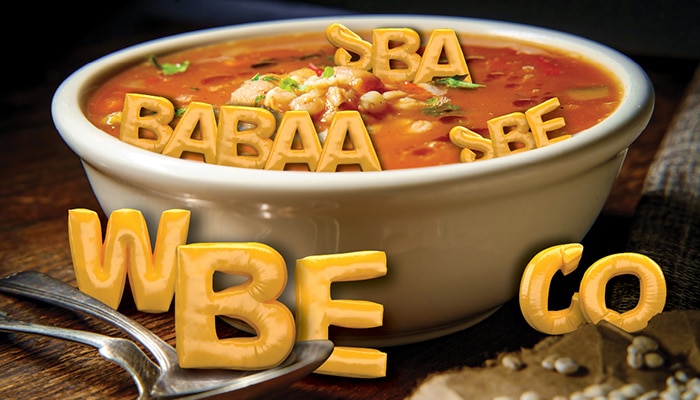
For example, some acronyms are used for special designations that define groups for which work is specially set aside. Others are reserved for the type of proposal requested and how the contract works. We’ve created a useful reference chart of some common acronyms used in federal government contracts if you’re not familiar with these terms or just want a list to keep handy.
8A – An 8(a) business is a small business at least 51% owned and controlled by socially and economically disadvantaged individuals, as certified by the US Small Business Administration.
BABAA – Build America, Buy American Act. Many federal government contracts contain a requirement that whenever possible materials should be sourced from US-based companies.
CO – Contracting Officer. This acronym can also stand for “Change Order” or “Commanding Officer.” Sometimes the contracting officer is referred to as the “KO.”
DBE – Disadvantaged Business Enterprise. This is a for-profit small business where socially and economically disadvantaged individuals own at least 51% of the firm and control management and daily operations. This designation is certified by the US Department of Transportation.
FAR – Federal Acquisition Regulation
FUBAR – Used originally by soldiers in World War II, it’s not actually going to be found in any contract, but it may be heard often. It stands for Fouled Up (or something like that) Beyond All Recognition/Repair. It is to be used when things are going dramatically wrong. See SNAFU.
GSA – General Services Administration
HZB – HUBZone is a business that operates and employs people in a historically underutilized business zone. This designation is certified by the US Small Business Administration.
IDIQ – Indefinite Delivery Indefinite Quantity. This is a contract in which the work is awarded to the contractor in the form of individual task orders.
JOC – Job Order Contract
LDs – Liquidated Damages. This is a predetermined dollar amount of damages to be paid per day as a penalty if the contract is not completed on time.
MATOC – Multiple Award Task Order Contract
MBE – A minority business enterprise is a business that is at least 51% owned by minority individuals. This designation is certified by the National Minority Supplier Development Council.
RFI – Request for Information
RFP – Request for proposal
RFQ – Request for quote
SABER contract – Used by the US Air Force, the acronym stands for “Simplified Acquisition of Base Engineering Requirements”. The main purpose of these contracts is to expedite the award of certain maintenance and repair work projects.
SATOC – Single award task order contract
SBA – Small Business Administration
SBE – A Small Business Enterprise is a small business as defined by the US Small Business Administration.
SDVOSB – Service-Disabled Veteran-Owned Small Business. The designation of Service-Disabled Veteran is certified by the US Department of Veterans Affairs.
SNAFU – This one has become part of common language, and many users are unaware of what the acronym stands for. Situation Normal; All Fouled Up.
WBE – A Woman-Owned Business Enterprise is at least 51% owned or controlled by one or more women who are US citizens or legal residents, as certified by the Women’s Business Enterprise National Council.
But wait, there’s more!
Although this is a list of common acronyms, it is by no means a comprehensive one. Federal contracts include many acronyms that are specific to the contracting agency.
Both the SBA’s regulations and the Federal Acquisition Regulation require certain public owners to consider SBA socio-economic programs first for set-aside and sole-source contracts for more than $250,000. There is no order of preference among the programs. The SBA socio-economic programs are 8(a), HUBZone, WBE or SDVOSB contractors.
At Old Republic Surety we underwrite and support all types of contracts for our contractor clientele. If you have any questions about a contract or would like clarification or a deeper understanding of a set-aside program or contract terminology, we invite you to contact your local Old Republic contract surety underwriter. https://www.orsurety.com/contact-information-for-old-republic-surety-company
About the author
Darrel Lamb, CPCU, AFSB, is senior vice president, Old Republic Surety.
Summary
The federal government has used acronyms for decades in bid documents and contracts. The challenge is deciphering the letters. Here is a useful reference chart of some common acronyms to keep handy.