Why Top Contractors Rely on SUE in Congested Corridors
By Emily Newton
The 811 call remains the regulatory baseline, but it was never designed to handle the utility congestion found in today’s urban and suburban redevelopment sites. Subsurface utility engineering (SUE) has emerged as an engineering process for contractors who need reliable data on the horizontal and vertical placement of utilities before breaking ground.
What Is SUE?
SUE is a method for documenting underground utilities during project planning and design. It operates under the American Society of Civil Engineers, which updated its governing framework as ASCE 38-22 in 2022. This standardization separates SUE from informal locating practices and establishes it as an engineering discipline.
SUE relies on trained professionals who use multiple investigation techniques to map existing subsurface conditions with surveyed accuracy. When integrated early in project development, this data shapes design and construction decisions rather than forcing last-minute adjustments.
SUE’s 4 Quality Levels
SUE operates through a tiered framework known as the four quality levels, each delivering progressively greater certainty about subsurface conditions. Understanding this hierarchy helps contractors match the depth of investigation to project risk profiles.
1. Quality Level D (QL-D)
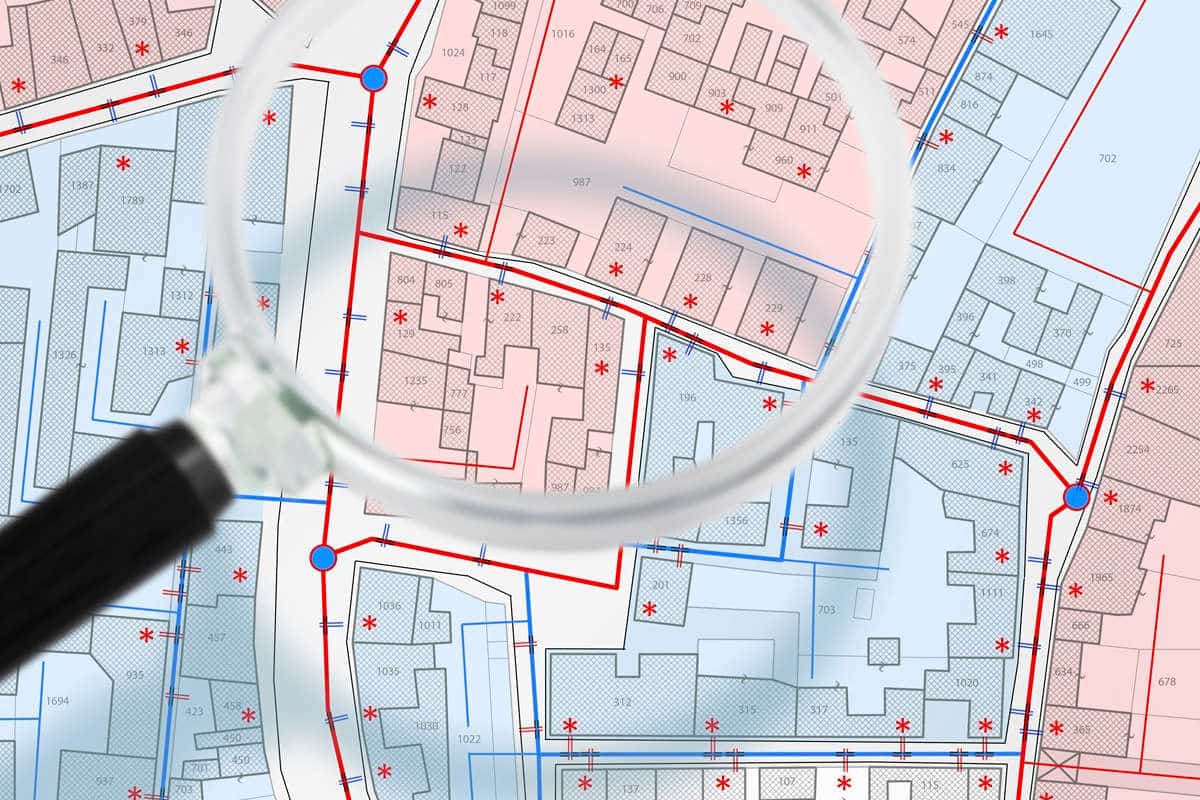
This baseline involves records research, compiling existing utility maps, as-builts and information from utility owners. It provides general awareness of potential utilities but limited spatial accuracy.
2. Quality Level C (QL-C)
Surface feature surveys are added at this level. Visible indicators like maintenance holes, valve boxes and utility markers are surveyed and correlated with QL-D data to refine understanding of utility routes.
3. Quality Level B (QL-B)
Ground-penetrating radar and electromagnetic induction detect and trace the horizontal position of buried utilities. The surveyed data provides significantly improved horizontal accuracy, making QL-B valuable for planning storm drainage systems, footers and foundations.
4. Quality Level A (QL-A)
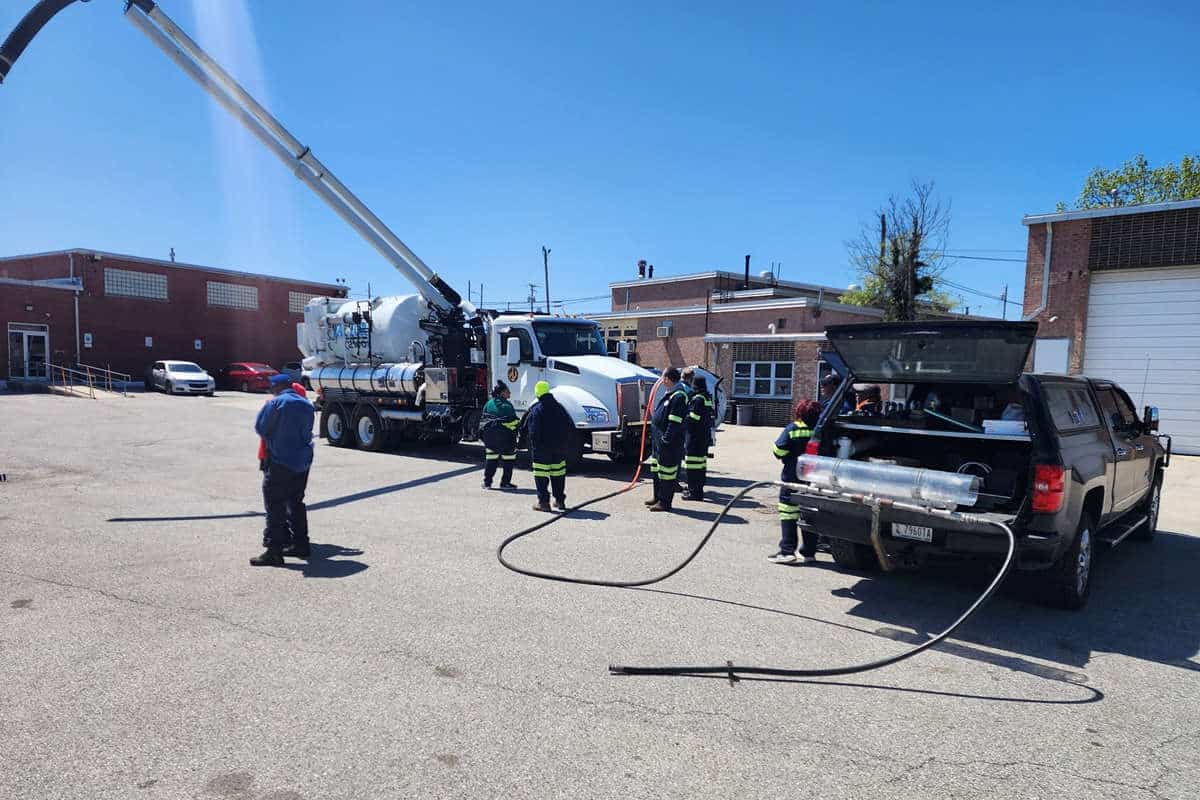
Physical exposure through vacuum excavation delivers the highest certainty. Utilities are exposed to determine the exact horizontal and vertical positions, materials, sizes and conditions. This survey data supports critical design and construction decisions.
How SUE De-Risks Projects and Boosts Profitability
The Common Ground Alliance’s most recent data shows nearly 200,000 annual damages reported nationwide, with water and sewer work leading all other categories in incident frequency. For contractors in this sector, that statistic reflects the cumulative cost of incomplete subsurface information. SUE can deliver a significant return on investment by preventing damage.
The risk reduction benefits include minimized utility strikes. The most direct way SUE de-risks projects is by preventing accidental strikes on existing underground utilities. Hitting a utility line can lead to severe consequences, including worker injuries or fatalities, service disruptions and environmental contamination.
SUE also helps teams avoid project delays. Utility conflicts, when discovered during construction, are a major cause of project delays. These can involve redesigns, re-routing utilities or waiting for utility owners to relocate their infrastructure. SUE identifies these during the planning phases, allowing for proactive solutions and avoiding costly schedule overruns.
In addition, SUE reduces the number of change orders. Unforeseen utility conflicts, such as discovering an unmarked drain that crosses the route of a sewer main, can lead to costly change orders during construction. With SUE, designers can account for utilities accurately from the outset and minimize the need for last-minute design changes and associated cost increases.
Crews can also help expect enhanced safety. Knowing the exact location and depth of utilities allows construction crews to work more safely and reduce the risk of accidents and injuries associated with blind excavation. For example, crews installing new sewer laterals can safely hand-dig around existing gas service lines using precise depth-position data.
Additionally, SUE directly improves bottom-line profitability through:
- Cost savings from avoiding strikes: The cost of a single utility strike can be enormous, encompassing repairs, fines, legal fees and reputational damage. By preventing these, SUE offers substantial direct cost savings.
- Reduced project duration: Avoiding delays and redesigns translates directly into shorter project timelines. This means projects can be completed faster, freeing up resources for new work and reducing overall overhead costs.
- Optimized resource allocation: Knowing where utilities are allows for better planning of excavation, equipment use and labor. This optimization prevents wasted resources on unexpected utility encounters.
- More accurate bids: With a clear understanding of subsurface conditions, contractors can submit better bids, reduce the need for contingencies and improve their competitive edge. It also helps avoid underbidding, which can lead to financial losses.
- Improved public and client relations: Projects completed on time, within budget and without incident enhance the reputations of the project owner and contractors, potentially leading to more work and stronger business relationships.
Adapting Operations for Denser, More Complex Environments
Data from the U.S. Census Bureau shows the Land Consumption Rate (LCR) to Population Growth Rate (PGR) declined from 0.838 in the 2000-2010 period to 0.627 in 2010-2020, confirming that new construction increasingly occurs in already-developed areas with existing utility infrastructure.
These denser environments create compounding challenges. Utility corridors in urban and suburban infill sites often contain decades of layered infrastructure with incomplete or inaccurate records. Right-of-way constraints limit working room while adjacent structures and active utilities demand careful sequencing.
SUE provides the detailed mapping these conditions require. Accurate horizontal and vertical utility data allows water and sewer contractors to plan excavation approaches, establish safe working clearances and coordinate installations around existing infrastructure. SUE converts uncertain subsurface conditions into documented utility locations, supporting informed decision-making throughout project execution.
Integrating SUE Into Your Preconstruction Workflow
Adopting SUE requires intentional integration into existing preconstruction processes rather than treating it as an afterthought. The practice delivers maximum value when contractors engage SUE providers during project planning, allowing utility data to inform design decisions before commitments are made.
Several key implementation steps can streamline this integration:
- List SUE costs as distinct line items: Specify which areas require QL-B designation and which need QL-A. This transparency helps project owners understand the value proposition and incorporates costs into budgets from the beginning.
- Coordinate data collection with project timelines: Schedule SUE investigations so utility data arrives when design teams need it. Late-arriving utility information loses much of its value and can force retrofits rather than informing the original design.
- Use SUE data to drive planning decisions: Apply SUE findings to equipment selection, crew planning and sequencing decisions. The precision SUE provides enables tighter project control and more efficient resource allocation.
Adopting SUE as a standard practice positions contractors within broader construction industry trends that prioritize safety improvements. As the industry continues to emphasize damage prevention and risk mitigation, contractors with systematic subsurface investigation protocols gain competitive advantages.
Build a Predictable Future for Your Business
SUE addresses a fundamental challenge for water and sewer contractors working in congested corridors with aging infrastructure. Accurate utility data transforms how projects are bid, planned and executed when existing water mains, sewer laterals and gas service lines must be worked around rather than discovered mid-excavation.
Contractors who integrate SUE into standard preconstruction workflows often report fewer conflicts with existing utilities and stronger relationships with municipal clients. As more work shifts to dense urban and suburban environments where utility strikes carry higher consequences, SUE will become essential for competitive underground contractors.
Emily Newton is a construction and industrial journalist. She is also the Editor-in-Chief for Revolutionized Magazine. Keep up with Emily by subscribing to Revolutionized’s Newsletter. Tags: SUE