Choosing the Right Earth Retention Tools for Utility Excavations: 8 Critical Insights
By Oscar Collins
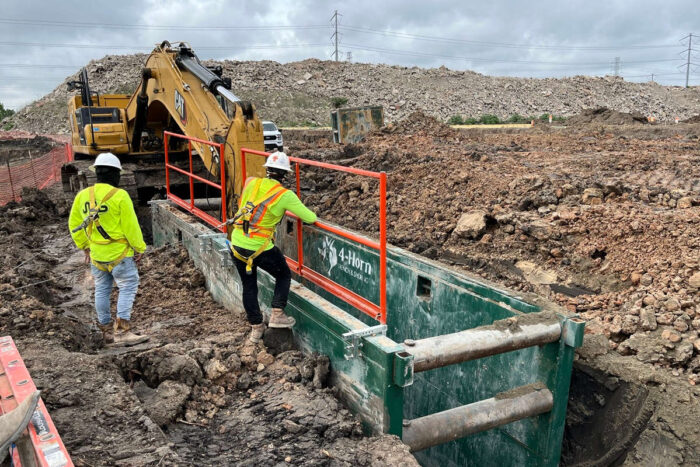
Utility excavations are rarely as straightforward as they look from the surface. Crews may need to work around existing utilities, unstable soil, groundwater, traffic, buildings and other site constraints while maintaining a safe excavation for workers.
Choosing the right earth retention tools goes beyond keeping soil out of a trench. The right system must match the excavation, ground conditions, project requirements and available workspace while allowing crews to install, access and remove it efficiently.
1. Start With the Soil and Ground Conditions
The first consideration should always be the ground itself. Soil type, density, moisture content, cohesion, groundwater and the presence of fill can all affect how an excavation behaves.
Cohesive soils may respond differently to excavation than loose granular soils. Saturated or disturbed ground can also become significantly less stable, particularly when excavation extends below the water table. A system that works well on one site may be unsuitable on another.
Before selecting an earth retention system, review available geotechnical information and assess the conditions that crews are likely to encounter as excavation progresses. Where conditions are uncertain, additional investigation may be necessary.
2. Match the Retention System to Excavation Depth
As a trench gets deeper, the consequences of soil movement become more serious. The retention system must be capable of managing the associated earth pressures.
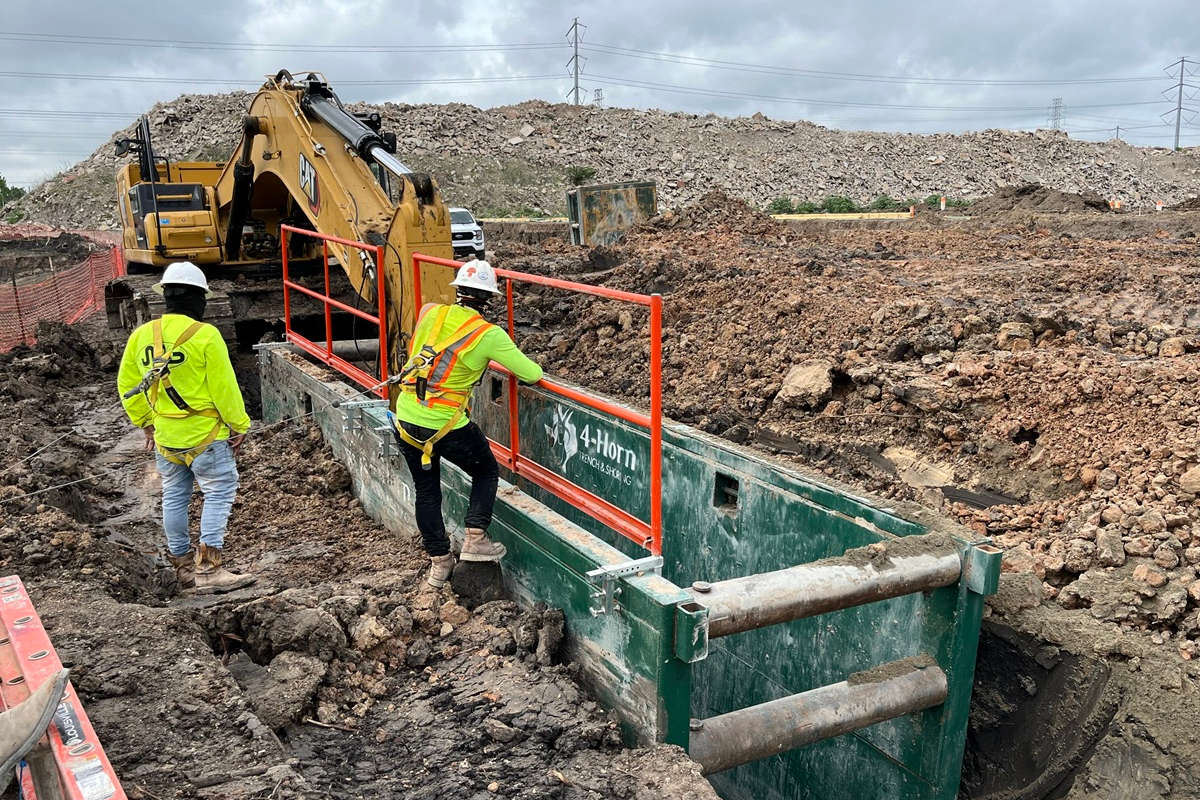
Different earth retention tools are designed for different depths, widths, soil conditions and loading requirements. Trench shields, hydraulic shoring systems, slide rail systems, sheeting and other retention methods each have specific applications.
Rather than choosing the largest or strongest system available, the system should provide an appropriate level of protection without creating unnecessary installation challenges or restricting the work area.
3. Consider the Type of Utility Work
The excavation method should support the work taking place inside it. Installing a relatively simple utility line may require different considerations than repairing a large sewer, replacing a water main or constructing a deep underground structure.
Think about the equipment that needs to enter the excavation, the number of workers involved, pipe dimensions, connection points and how much working room crews need. A retention system that leaves insufficient clearance can slow the project and make routine tasks more difficult.
For projects involving multiple utilities or complex connections, flexibility becomes especially important. Systems that can adapt to changing excavation dimensions may help crews avoid repeatedly modifying the excavation support arrangement.
4. Evaluate Existing Utilities Before Excavating
Utility excavations often take place in environments where other infrastructure is already underground. Gas lines, electrical cables, telecommunication infrastructure, water pipes and sewer systems can all complicate excavation.
Accurate utility locating should form part of the planning process before crews begin digging. The retention system must be selected and installed to account for these existing structures.
This can influence everything from excavation dimensions to equipment positioning. In congested areas, a system that requires large amounts of external space or extensive excavation beyond the work zone may be impractical.
5. Think About Installation and Removal
An earth retention system is only useful if crews can install and remove it safely and efficiently. Consider how the system will be transported to the site, positioned, installed, adjusted and eventually removed.
Equipment access also matters. Tight urban sites, narrow roads, existing structures and overhead restrictions can limit the machinery available for handling larger components.
Installation should also be considered alongside the excavation sequence. Some systems are installed progressively as excavation advances, while others may require different procedures. Choosing a system that fits the planned sequence can reduce unnecessary handling and help keep the project moving.
6. Account for Groundwater and Water Management
Water can dramatically change excavation conditions. Groundwater may weaken soil, create instability, interfere with utility installation and make it harder for workers to maintain a stable work area. Different types of soil, such as clay, also retain more moisture than others.
Where groundwater is expected, the retention strategy should be considered alongside the site’s water-management plan. Depending on the conditions, this could involve dewatering, pumping, drainage, well points or other measures.
Drainage should also be part of the retention strategy. The condition of drainage pipes matters because blockages can prevent water from flowing properly and allow runoff to pool at the base of the wall. Regularly checking and clearing these pipes can help maintain proper water management around the retained area.
Retention and drainage systems need to work together. Ignoring this relationship can result in delays and create additional risks as excavation progresses.
7. Consider Adjacent Loads and Structures
The soil surrounding an excavation may be carrying more than its own weight. Nearby buildings, roads, construction equipment, stored materials, vehicles and other loads can increase pressure on the excavation walls.
In urban and industrial environments, there may be very little separation between excavation and existing infrastructure. Before choosing a retention method, consider what is located around the excavation and how those loads could affect the ground. The system may need to accommodate additional lateral pressures or help limit ground movement to protect nearby structures.
8. Prioritize Worker Protection
Worker safety should be central to every excavation-support decision. Earth retention systems are designed to help protect workers from cave-ins and other excavation hazards, but the selected system must also be appropriate for the site’s specific conditions.
In the United States, excavation work is subject to requirements established by the Occupational Safety and Health Administration, including requirements covering protective systems, competent-person inspections and different soil classifications.
Compliance shouldn’t be treated as a box-ticking exercise. The system needs to be properly selected, installed, inspected, used and maintained throughout the excavation. Conditions can change during a project, so ongoing assessment remains important.
Getting the Right Fit From the Start
Choosing earth retention tools for utility excavations requires a site-specific approach. The right system should integrate with the excavation sequence, give crews enough room to work, accommodate the site’s constraints, and support a safe and efficient project from excavation through backfill.
Oscar Collins is the editor-in-chief at Modded. He’s written for sites like Contractor and StartupNation. Follow him on Twitter at @TModded for frequent updates on his work.