Digitizing Fleet Management: How Purpose-Built Software is the Next Evolution
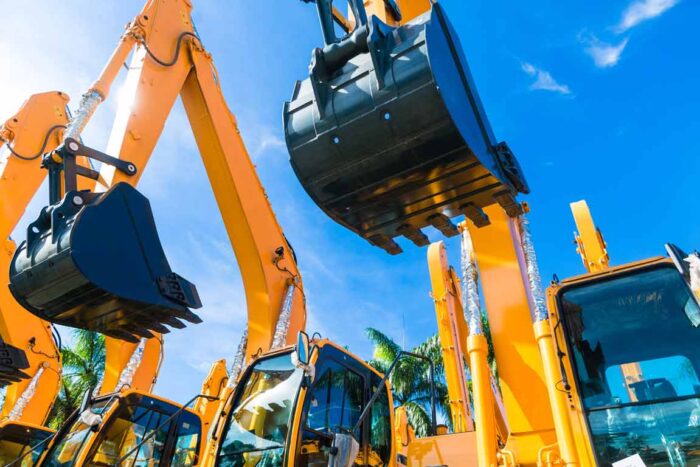
For any contractor, knowing where all your vehicles and equipment need to be at all times is essential for a successful operation. For contractors today with a larger fleet, managers may want regular access to fleet status, inspection reports, driver or operator efficiency, and more.
Utility Contractor recently caught up with the experts at Tenna to discuss what’s trending in software for fleet management, their perspective on how contractors are adopting tech in 2026, and what has evolved.
Whether you’re looking to bolster management of on-road vehicles or equipment for the jobsite, ensuring that inspections are completed is critical, says Gina Setzer, vice president of marketing at Tenna.
“If you’re talking about on-road vehicles, you have Driver Vehicle Inspection Reports (DVIRs) that are needed before vehicles go out on the road. Automating and digitizing that process helps eliminate the paper-based systems and ensures the shop and maintenance teams actually get information about problems with the vehicle,” Setzer says.
“When you automate that, you’re taking the failed inspection criteria items and getting those over to the shop right away. It accelerates the repairs that are needed so you’re always running a safe fleet,” she adds.
Contractors may also use scorecards for drivers and operators, and may conduct custom inspections for unique equipment asset classes they’re operating on jobsites.
“Contractors may have different inspections for excavators than for other equipment,” she says. “Cranes typically have a lot of inspection requirements. Building all of that out in a digital platform is very valuable.”
Adoption
Another area Tenna sees evolving in the utility construction space is procurement of software for fleet management.
“They’re realizing there is a ton of software and hardware out there, and they’re getting better at buying specifically for the job at hand,” says Russ Young, chief business development officer at Tenna.
“Contractors have been buying excavators for decades, so they’re really good at it. Buying software has been something new, but they’re getting better at it and they’re realizing they need to buy purpose-built [software] for their company or job. It’s a great trend we’ve been seeing the past couple of years.”
Overbuying is another trend, he says.
“I’ve also talked to some contractors in the space who feel that they’ve overbought tech, or contractors who have 50-plus pieces of technology but only using it to 20-30% of its capability,” he says.
As Young explains, contractors are deliberately adapting their buying habits, focusing on less technology, and focusing on using what they have to its full potential. “They’re realizing maybe less tech is better,” he says.
Tools -> Technology -> AI
Like in every other industry, artificial intelligence (AI) is making its way into equipment for the jobsite.
“Everybody is excited to talk about AI – they love it, they hate it,” Young says. “When excavators first came into the market, the sentiment was that the guy with the shovel had better learn how to operate the machine because 10 guys with shovels were going to get outperformed by one guy with an excavator. That’s where AI is taking us on the software front.”
Young says one notable trend in the utility construction market is the use of AI on cameras for equipment, referencing a new offering from Tenna.
Jobsites can be congested with limited visibility in tight work spaces, with other equipment traffic and laborers constantly in proximity. Heavy equipment camera systems are designed to prevent any incidents. Now, AI built into the cameras can help deliver real-time, in-cab alerts for operators to help identify workers and pedestrians in blind spots.
“When you’re out there in the field, you want to know where things are, where people are, how you can avoid an accident, and how you can avoid slowing down the project,” Young says.
Again, he stresses the importance of purpose-built solutions, noting that the environment for AI and tech adoption is such that contractors need to be careful about purchasing what they perceive to be the next best thing only to underutilize it or fail to fully build it out.
“Contractors will tell you, good design leads to good build. In tech, the same is true – good design leads to good build,” he says. “Constractors should ask, ‘Was it built to serve what I do?’ Don’t buy a solution, solve a problem.”
Partnerships & Integration
Analogous to the relationships general contractors build with their subs, Young says similar partnerships are also a key to deploying new software solutions for fleet management.
“Do you have an 800 number you need to call when you have questions? Or do you have an assigned account manager who actually knows your business and understands what you’re trying to accomplish with the tech and will work with you?” he asks.
The ability for a new fleet management solution to integrate with other systems is also a consideration. On the contrary, integration with too many other systems can complicate an operation.
“Construction companies hate multiple entries of data. It’s massively inefficient, slows down work and causes errors in data. For example, silos between equipment software, project software, labor stuff, ERP, and others where none of them talk to each other, is a massive problem. Simple, purpose-built data needs to get to the people who need it.”
“There’s a lot of noise in the market with all these solutions,” adds Setzer. “It’s important to look for a solution that is rooted deeply in the industry. One size does not fit all. You really need a system that’s tailored to the construction industry because then you have the confidence that it was built for the workflows contractors use every day.”
Why It Matters
Purchasing technology and integrating software may not be necessary for every contractor, but those with a large enough operation to necessitate it may need to embrace it. First off, equipment is a massive expense for a utility contractor – usually in the top three, Young says. Using software tools to manage the fleet efficiently can help protect a construction company’s investment in equipment, vehicles, etc.
Another key reason, Young says, is attracting the next generation to the workforce.
“Historically, people who went into utility construction went into it because they didn’t want to be sitting at a laptop. Now, everybody has a computer in their pockets. People in their 20s coming into utility construction expect things to be done like this. If you’re not enabling tech, people will leave to go work for other companies.
“But the good news is, contractors are all getting better at tech integration.”
Andrew Farr is a contributing editor of Utility Contractor. Tags: Tenna